
Haydn Fest
Castle Knezice
Josef Haydn String Quartets
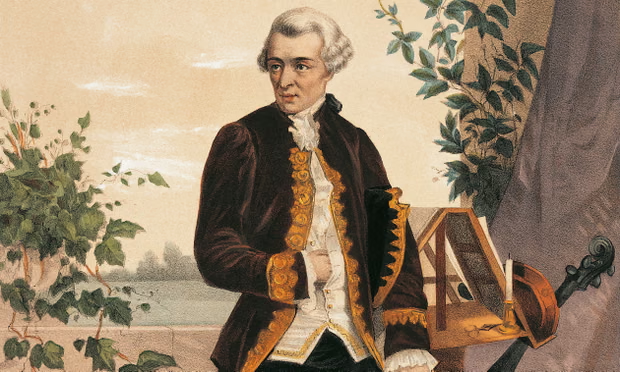
Joseph Haydn wrote 68 string quartets, establishing the template for the classical genre. His works evolved from simple, divertimento-like pieces into complex masterpieces that treated all four instruments as equal conversational partners. They shaped the Classical era through profound structural innovation, contrapuntal depth, harmonic wit, and diverse emotional expression.
Early Period (1757–1772): Establishing the Form
Opus 1 & 2 : Designed
as five-movement divertimentos, heavily featuring the first violin.
Opus 9 & 17 : Settled into the standard four-movement structure with
increased emotional depth.
Opus 20 ("Sun") : A major breakthrough utilizing complex
four-voice fugues and democratic instrument textures.
Middle Period (1781–1790): Wit and Maturity
Opus 33 ("Russian") :
Written in a new, witty style where themes shatter into conversational
fragments.
Opus 50 & 54/55 : Showcased advanced harmonic textures, daring modulations,
and brilliant soloistic cello writing.
Opus 64 : Blended popular, accessible melodies with intricate intellectual
craftsmanship. [1]
Late Period (1793–1803): Public Majesty
Opus 71/74 ("Apponyi") :
Added bold introductory chords tailored for large London concert halls.
Opus 76 ("Erdődy") : Reached a pinnacle of formal freedom,
incorporating hymn tunes and proto-Romantic expression.
Opus 77 & 103 : His final, visionary works bridging the gap toward
Beethoven's dramatic quartet style.
String Quartets Finder
Josef Haydn Piano sonatas
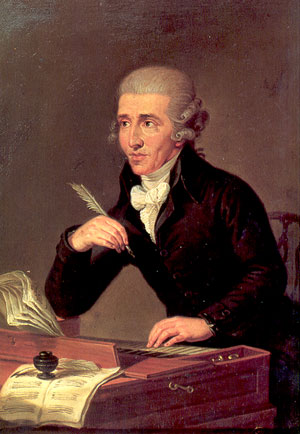
Joseph Haydn's piano sonatas are fundamental to the development of Classical keyboard music, charting his transition from early harpsichord divertimenti to mature, expressive masterpieces designed for the fortepiano. Across more than 60 works cataloged by Anthony van Hoboken (Hob. XVI), Haydn introduced dramatic structural innovations, humor, and a range of styles.
Chronological Eras
- Early Works (Before 1770): Light, multi-movement divertimenti meant for harpsichord instruction or entertainment.
- Sturm und Drang (1770s): Marked by intense, emotional minor keys. A prime example is the dramatic Sonata in C minor, Hob. XVI:20.
- Late Masterpieces (1780s–1790s): Highly inventive works, culminating in his London trio (Sonatas 60–62), which feature grand, symphonic textures tailored for modern instruments.
Musical Innovation
Haydn expanded sonata form with unmatched wit and unexpected key changes. Unlike Mozart, who wrote sonatas primarily for teaching, Haydn composed for highly skilled amateurs and virtuosos, driving technical and artistic limits forward.
Piano Sonatas Finder
About us
Haydn Fest
The ART Foundation is a non-profit-making organisation, supports european education projects ... the various branches of creative activity, such as music, literature, painting and architecture.
The cooperation with Ševčík Academy brings to possibility to explore the work of Joseph Haydn.
As well as promoting academic research into his work, it will also be providing the support structure for the Haydn Fest project from a formal, financial and organisational point of view.
Under the project, all Haydn string quartets and piano sonatas will be performed across Europe, until the 300th anniversary of the composer's birth in 2032. The aim of the Foundation's project is to give due prominence to the important position occupied by Joseph Haydn in the history of music and to revise fundamentally the prevailing image we have of the composer, in the years leading up to the anniversary and beyond.